The Case for SmartTrack™
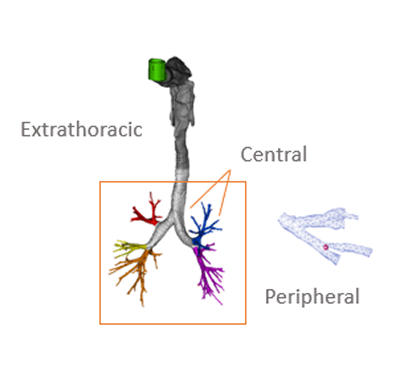
The opportunity to apply our exclusive SmartTrack™ platform goes beyond just the demonstration of bioequivalence of orally inhaled drug products. SmartTrack™ can accelerate the development process by integrating real patient data, in vitro testing and in silico computational modeling to reliably predict lung deposition and bioavailability, while conducting fewer clinical studies.
SmartTrack™ can provide data to support early development decision making, a more accurate mechanistic understanding of the drug delivery process and support provide a stronger regulatory justification for regulatory product approval. There are numerous a number of advantageous applications that can benefit from for the SmartTrack™ platform.

Generic Inhaled Drug Product Development
SmartTrack™ can be used to help demonstrate the bioequivalence of a new generic inhaler drug product to a reference listed drug (RLD), supporting justifications around potentially overdiscriminating in vitro data, without having to default to costly, time consuming comparative clinical endpoint studies (CCEPs) that lack sensitivity.
Reformulation or Device Switch Programs
SmartTrack™ can be used to benchmark regional deposition and bioavailability of a reformulated orally inhaled drug product against the currently approved product in a different dosage form or device, helping with dose selection, product optimization and minimizing clinical development cycles. SmartTrack™ can contribute to an accelerated reformulation process and a derisked regulatory review process.
pMDI Transition to Next Generation Propellants (NGP)
When replacing a current hydrofluoroalkane (HFA) propellant with a Next Generation Propellant (NGP) in an existing pressurized meter dose inhaler (pMDI), substantial product redevelopment is required from valve selection, formulation modifications and comparison of aerosol performance to match the dose. SmartTrack™ can be used to optimize the development process and understand if and how non-Q2 products are still equivalent, while generating data ready for regulatory submission. Our research contract with the U.S. FDA puts us in a strong position to share gained insight with the industry.
Nasal Spray Products
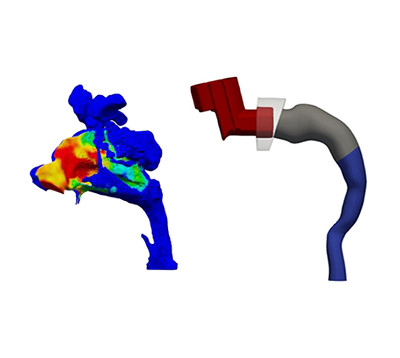
SmartTrack™ can also be applied to nasal spray products, where for certain indications the its regional deposition is key to its performance for certain indications. Whether targeting the olfactory region for nose-to-brain delivery, or screening permeation enhancers to achieve rapid systemic absorption, SmartTrack™ can give you rapid insight into how your drug is behaving following delivery.