SmartTrack™ Alternative Bioequivalence Platform Overview

Defining SmartTrack™

SmartTrack™ is an alternative bioequivalence platform for inhaled drugs that combine in vitro and in silico models with real patient data.

What is SmartTrack™?

Nanopharm and FLUIDDA’s SmartTrack™ alternative bioequivalence platform was designed through collaboration to accelerate inhaled drug product development through an integrated digital platform that utilizes real world patient data combined with advanced in vitro models and in silico simulations to support claims of bioequivalence for generic inhalers.

SmartTrack™ Alternative Bioequivalence Platform Overview

SmartTrack_Overview_img

Patient breathing
profile collection

SmartTrack_Overview_img

Microstructural characterization

SmartTrack_Overview_img

In vitro realistic
aerosol testing

SmartTrack_Overview_img

in silico regional lung deposition modeling in patient models

SmartTrack_Overview_img

in silico
PK modeling

The SmartTrack™ alternative bioequivalence platform allows scientists and regulators to better understand the complex interconnected factors that can impact the delivery of inhaled products to the lungs.

SmartTrack™ applies real patient breathing profiles and anatomical throat models in its in vitro testing and then models deposition in real patient airways using its in silico models. Together this produces a detailed and predictive understanding of how the patient, drug and device together impact drug delivery and help form a more holistic understanding of their bioequivalence to comparator products.

abt_image_text_block_img
dots-shap-3

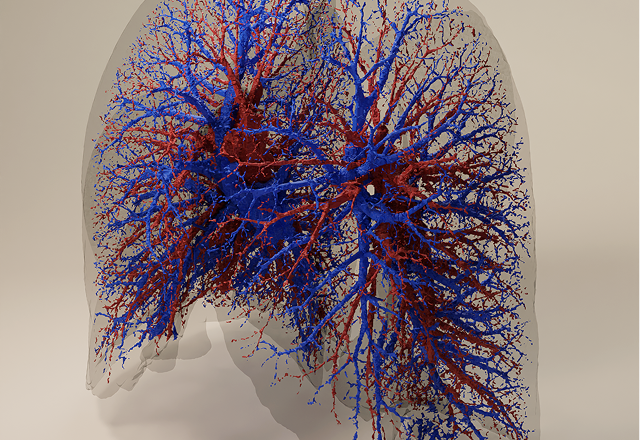
SmartTrack’s in silico modelling can determine the relevance of slight variations between drug products in vitro on the drug’s regional exposure in the lungs, considering the weighted impact of other variables such as inherent patient physiology, as well as the limitations of the in vitro test methods themselves. SmartTrack’s in silico modelling is used to:

Establish more biorelevant limits

for bioequivalence comparisons using realistic aerodynamic particle size distribution (ASPD) and plume geometry studies, in case traditional limits for QC-based tests are overdiscriminating or misleading.

Understand the relative impact of upstream variables

including human factors, such as the coordination between patient inhalation and actuation, on regional lung deposition using computational fluid dynamics (CFD), which may also impact in vitro data.

The SmartTrack™ alternative bioequivalence platform uniquely

  • Uses real patient data to account for individual and population variability
  • Incorporates real world disease specific physiologies
  • Helps us understand variances in in vitro data and account for patient variability
  • Avoids idealized scenarios in such a complex dynamic such as the lung
  • Participates in direct sponsored research and workshops with the U.S. FRI
  • Delivers a credible and validated* option as supportive evidence to updated Product-Specific Guidances (PSGs).

Validation study ongoing – expected completion end 2026.
abt_image_text_block_img

SmartTrack™ Integrated Evidence Platform

Traditional bioequivalence studies can lack the necessary sensitivity to fully account for human variability and the complexity of the inhaled drug delivery route on bioequivalence. Nanopharm and FLUIDDA’s SmartTrack™ platform connects experimental data and mechanistic simulations to create a single model that predicts end-to-end inhaled drug delivery performance.
abt_diagram_img

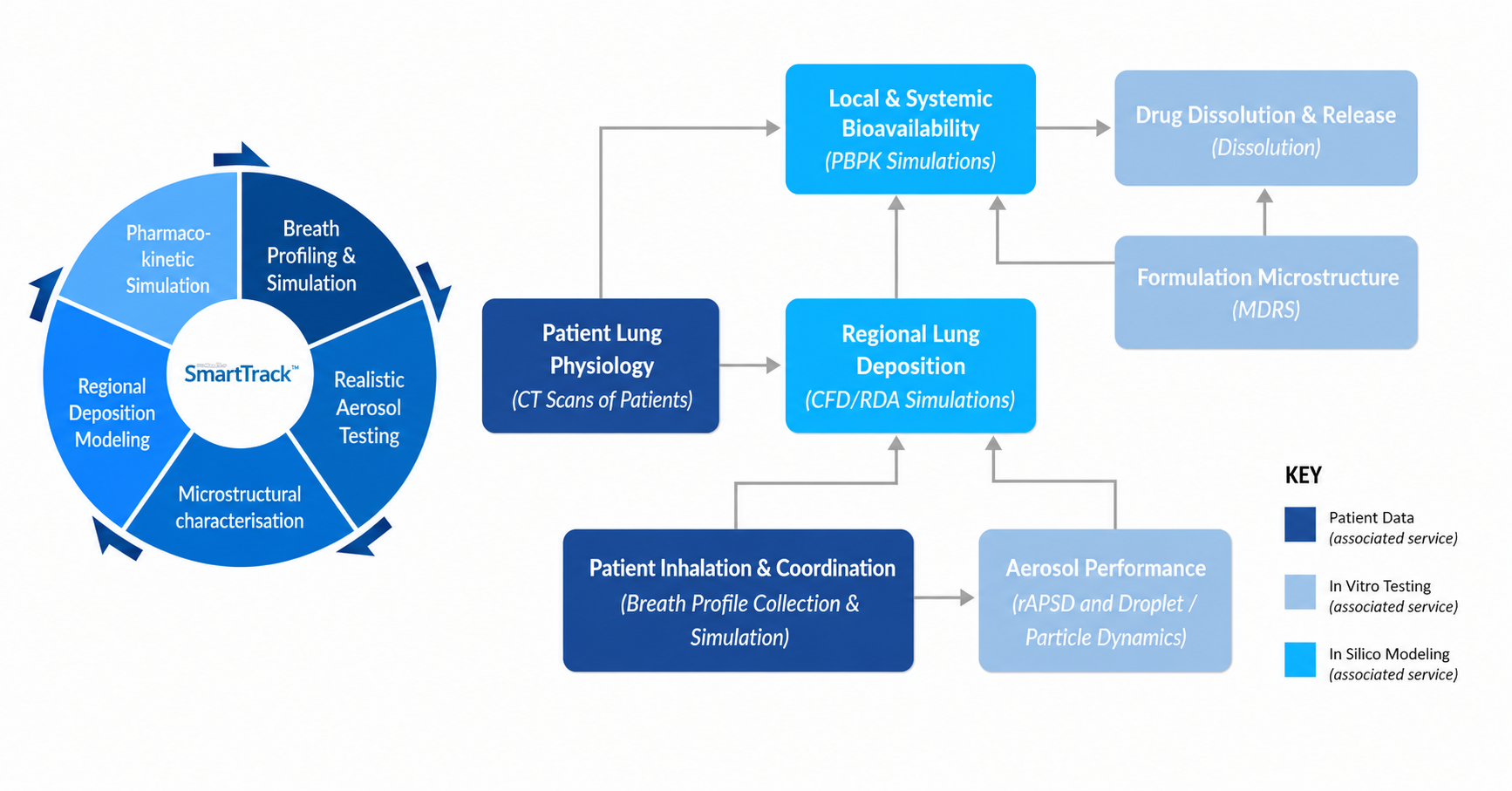
The SmartTrack™ alternative bioequivalence platform consolidates many of its specialized tests and proprietary models to deliver a more detailed and representative data-driven understanding of the actual presence and deposition of inhaled drugs in the lungs.

SmartTrack™ is based upon a multi-layered framework that integrates aspects of aerosol science, lung physiology, formulation microstructure, and computational modeling into a single, predictive system.

Scientific Foundations of SmartTrack™

Since 2002, Nanopharm has been a leading specialist CRO for nasal and inhaled drug products offering formulation, analytical testing and computational pharmaceutics services. In collaboration with FLUIDDA, a world leader in the field of Functional Respiratory Imaging (FRI), the SmartTrack™ platform uses real patient inhalation data and lung geometries, integrated into purpose-built models, to separate product versus patient effects. Together, SmartTrack™ employs a number of specialized scientific approaches.
  • Digitized Patient Behavior – Real patient derived airway models and breathing profiles.
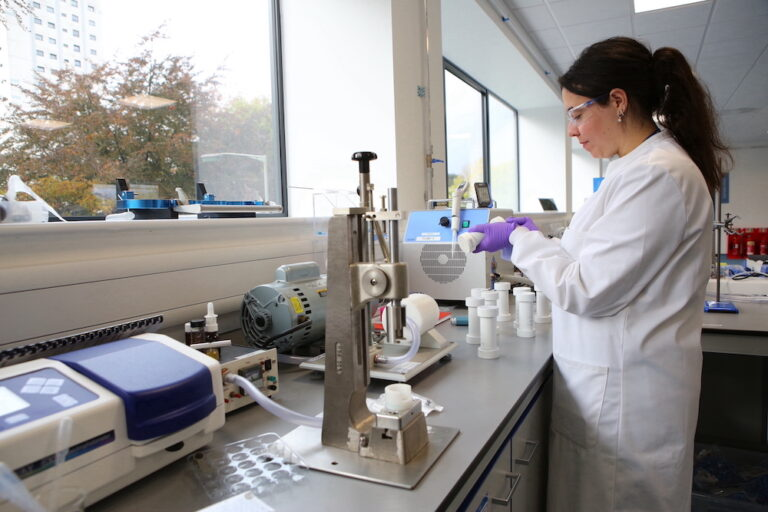
  • Aerosol science and inhalation mechanics - Defines how inhaled drug particles are generated, transported and deposited in the target region of the lungs through breath profiling and realistic aerosol testing using anatomical throat models, leveraging digitized patient breathing profiles, and proprietary realistic automation profilers (RAP™).
  • Microstructural (Q3) characterization – Direct comparison of test and reference formulation microstructure that determines impact on bioavailability post-deposition, using tools such as Dissohale™, IVRT and MDRS.
  • Airway Deposition Modeling with FRI™ – Regional throat and lung deposition simulated through computational fluid dynamics (CFD) with patient derived models.
  • Simhalation™ – SmartTrack’s PBPK simulation platform that predicts Cmax, Tmax, AUC and local lung exposure by integrating upstream data including rASPD, dissolution, and deposition while demonstrating correlation to systemic PK.
abt_scientific_foundations_img

The SmartTrack™ platform integrates these foundational scientific elements together to produce a quantitative model that is able to reliably predict real world bioequivalence for inhaled drug products.

Digital Evidence for Bioequivalence

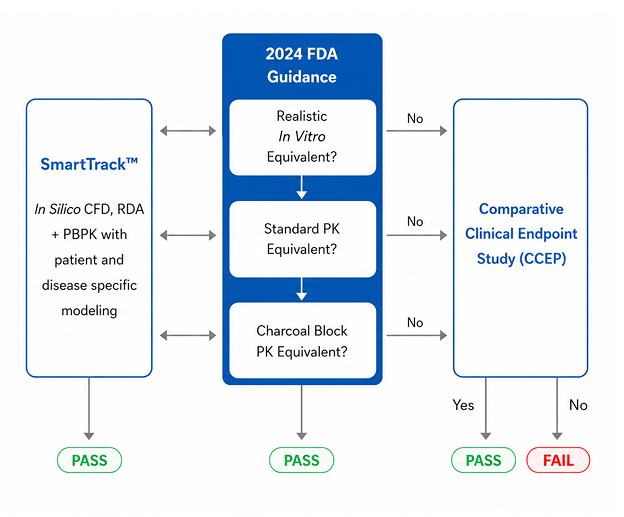
  • When the generated data package does not pass traditional bioequivalence metrics, the pathway available as provided in updated Product Specific Guidances (PSGs) would default to the completion of a comparative clinical endpoint (CCEP) study.
  • SmartTrack™ is a faster and more data-driven alternative pathway to build solid evidence base and understand the root cause of the observed differences in the data sets. This is intended to reduce the ambiguity and number of follow on questions from regulators by providing a comprehensive weight of evidence package.
abt_diagram_img

Defining SmartTrack™

Nanopharm and FLUIDDA’s SmartTrack™ builds on the scientific foundations of inhaled drug delivery creating an integrated digital evidence platform that demonstrates bioequivalence. It does so in a single integrated simulation framework that reliably predicts the real-world performance of inhaled drug products in humans. It helps scientists and regulators to understand the variances evident in in vitro data and accounts for patient variability that may not be apparent in traditional systemic PK driven studies performed under a weight of evidence approach.

The SmartTrack™ alternative bioequivalence platform can reduce the need for comparative clinical endpoint (CCEP) studies in generic drug product approvals by accurately predicting clinical outcomes if in vitro data is inconclusive. This removes a major barrier for generic companies as well as regulators, thus paving the way for wider and earlier patient access to medications.

Contact Nanopharm today and accelerate
your inhaled product development program with SmartTrack™

Contact Us